
The Long Term iPhone 12 Camera Review
I use my phone like most people. I scroll through my social media feeds, order from overpriced delivery apps, and even make the occasional phone call. But in 2021, there’s one feature alone that decides how much I’ll spend on a phone: the camera. I take photos. At
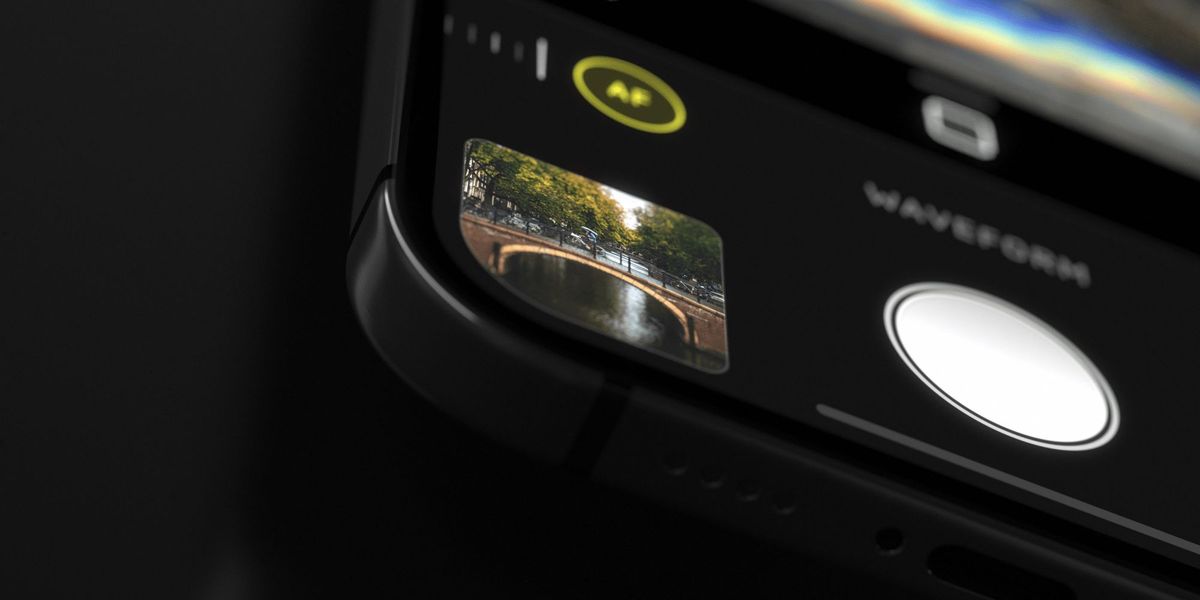
Sadly, the telephoto camera remains the only camera on your iPhone that doesn’t support Night Mode. These beefy new iPhones still just crop part of your Wide camera image, and pass that off as a capture from your telephoto lens. Even the Ultra-wide lens now supports Night Mode. I really hope we’ll see this done ‘properly’ in the next iPhone.
The Pipeline
If there’s any hardware revision to be excited about year over year, it’s not the camera, but the processor and memory of your new iPhone. Apple makes the fastest mobile chips hands-down, which unlock new tricks to create images previously impossible in sensors the size of your thumbnail.
Apple now actively markets their smart photography pipeline. They give brand names to algorithms, like Smart HDR and Deep Fusion. These complex technologies use all the power of the latest chipsets, such as real-time machine learning that selectively enhance details in areas, guesses white balance in night shots, detect subjects and more. It’s no exaggeration to say that the iPhone 12 is the smartest camera Apple has built yet. Does it result in a better shot?
For casual photography, yes. Earlier generations (cough, iPhone XS) struggled to retain detail after aggressive ‘smart’ noise reduction. Apple’s new smart technologies generates much more natural images. Whether it’s people or animals, detail is retained in skin and hair.
Contrast this with the many Android phones that enable problematic effects like skin-smoothing, by default. Making automatic ‘enhancement’ of your image opt-out sets a scary precedent.
Will future phones make you skinnier, and give you bigger eyes? Our ideals of beauty matter, and while photography is subjective, an automatic ‘lens’ on the most-used cameras of our time will greatly affect society and those in it, especially impressionable young humans. I have no doubt that Apple considered ‘beautifying’ effects to remain competitive, but I’m happy to see them remain absent.
While the iPhone does a lot of processing, it’s conservative in its… editorial decisions. It’s not afraid to let you take a bad photo: color saturation and contrast is fairly neutral, with its white balance skewing towards taking warmer images. I don’t mind that: I think that’s a ‘look’ that we’ve come to expect from Apple.
The only time that I found the smart image processing on the iPhone noticeably bothersome is when skies get overly tinted blue. It’s clear that the iPhone can now easily detect and segment the sky in a shot, and it applies nice smooth noise reduction to it to get wonderful gradients. But even cloudy skies tend to get a blue cast that isn’t as neutral as you’d like.
Meanwhile, some Android phones make such aggressive changes that they’re accused of adding a fake moon.
Low Light
iPhone 12 collects more light, so it takes nice photos when the sun starts to set. I found that I got a lot less noise in my RAW files and more detail in my non-RAW files quite consistently. Once the sun goes below the horizon, the camera app can also manage to take photos without Night mode. The benefit to this is more detail (less noise reduction), and the ability to take low-light Live Photos.
It’s not really news that the iPhone 12 is the best low-light camera Apple has built yet. With the introduction of Night mode, Apple brought a very robust computational-photography based long exposure option to the masses (I love a good computational long exposure tool).
You’ll find that you can take Night mode shots on the new iPhones in surprisingly dark conditions. Coming from an iPhone that lacked night mode can be kind of mind-blowing, and even larger digital cameras will feel some envy seeing an iPhone do hand-held ’10 second exposures’.
I add quotes there, because while Apple gives you a nice duration setting, it always attempts to get a sharp shot. Night Mode is a classic Apple solution: ease of use through no real configurability. Getting light trails or soft effects is impossible, as it prioritizes getting a ‘sharp frame’ and then stacking additional detail onto it.
You can, however, let the iPhone get steady enough on a surface (hey, the sides are flat now) or on a tripod to select an exposure time of up to 30 seconds.
In a pitch black night moonless night in New Mexico, that can get some really impressive shots:
Now, does this stack up against a larger camera yet? I wouldn’t say so. What is harming Night Mode the most for a serious photography is its inflexibility. Support for ProRAW helps a lot — that adds more detail and adjustability to the heavily processed output.
But as developers of a camera app, we’d love to have a Night Mode API to add options like how much frame blending is done, what level of noise reduction is applied, and more. Doing a ‘true’ long exposure like this:
Is just not possible right now as the iPhone will optimize to get those cars sharp. That makes perfect sense: Night Mode is optimized for most people, who will likely take photos of friends in a dim restaurant, or the moon over the city. You want sharp shots. But as always, taking away options to make a feature accessible and easy to use also comes at an expense of utility to those that are pursuing creative options beyond what the camera prescribes.
Let’s hope for a Night Mode API in the future.
LIDAR and You
iPhone 12 Pro has a particularly interesting looking shape on its camera mesa which does not protrude, unlike its camera lenses. Underneath this opaque reflective disk lives a sensor that does something very cool. It senses depth.
Jabir Digital
Founder and editor of StartsNest. Technology writer and digital marketing specialist with expertise in mobile technology, consumer electronics, and online business strategies.
View all articles by Jabir Digital →More to read
iPhone 17e: An Almost Perfect Entry
You may think the e in 17e stands for economy or essential, but I think it stands for entry. Sure, it doesn't have all the bells and whistles, but you get access to vibrant ecosystem of third-party apps, and now your friends will stop mocking you for green
Inside Looks: A Mark III Preview
Today launched a public preview of Halide Mark III, the next generation of our flagship photography app. It's still a work in progress, but we're ready to start sharing what we've worked on for the past year through a series of app updates alongside posts like this. Today, we're diving into Looks.
Requiem for the Rangefinder: An iPhone Air Review
Last week I set out to write a few thousand words on the iPhone Air, but it turns out I only need three: the lesser iPhone. Compared to the Pro and baseline models, it has fewer cameras and a smaller battery. For an extra $100, you can upgrade to an
Comments (0)
No comments yet. Be the first to share your thoughts!