
Pixel 9 Pro Vs Pixel 9 Pro XL: Which One is For YOU?
A detailed comparison of the Pixel 9 Pro and Pixel 9 Pro XL across design, display, camera, performance, and battery to help you choose the right Google flagship.
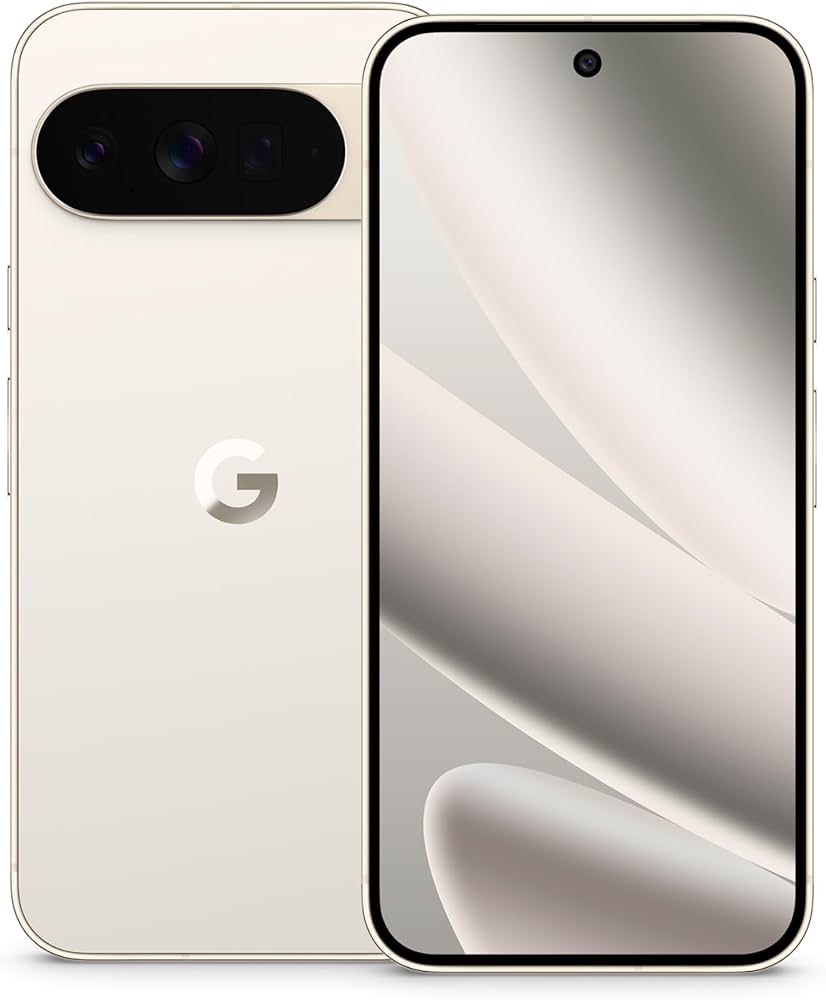
Pixel 9 Pro vs Pixel 9 Pro XL: Which One Is Right for You?
Google's Pixel 9 series introduced a new three-tier lineup: a base Pixel 9, a compact Pixel 9 Pro, and a larger Pixel 9 Pro XL. The two Pro models share almost identical hardware, which makes choosing between them more about size, battery life, and comfort than about raw capability. If you are torn between the Pixel 9 Pro and the Pixel 9 Pro XL, this guide breaks down every meaningful difference so you can pick the phone that actually fits your life.
Key Differences at a Glance
| Feature | Pixel 9 Pro | Pixel 9 Pro XL |
|---|---|---|
| Display size | 6.3 inches | 6.8 inches |
| Weight | 199 g | 221 g |
| Battery | 4700 mAh | 5060 mAh |
| Peak brightness | Up to 3000 nits | Up to 3000 nits |
| Cameras | 50MP + 48MP + 48MP | 50MP + 48MP + 48MP |
| Chipset | Google Tensor G4 | Google Tensor G4 |
As the table shows, the core experience is nearly identical. The XL simply gives you more screen and more battery in a larger, heavier body.
Design and Build Quality
Both phones use a polished aluminum frame, a matte glass back, and Corning Gorilla Glass Victus 2 on the front. They carry an IP68 rating for dust and water resistance, and both use 100 percent recycled aluminum in the frame with plastic-free packaging. Google also added a fingerprint-resistant coating to the matte back, which keeps smudges under control.
The real difference is physical. The Pixel 9 Pro XL is about ten millimeters taller and roughly twenty-two grams heavier. If you prefer a phone that disappears in your pocket and is easy to use one-handed, the standard Pro is the better fit. If you value a bigger canvas for reading, gaming, and video, the XL's extra size is a feature rather than a drawback.
Display Experience
The Pixel 9 Pro has a 6.3-inch Super Actua LTPO OLED display, while the XL stretches to 6.8 inches. Both support HDR, a 1 to 120 Hz dynamic refresh rate, and peak brightness up to 3000 nits, so outdoor visibility is excellent on either model. The XL adds a slightly higher resolution thanks to its larger panel, but pixel density remains sharp on both.
For most people the choice here is about comfort. A 6.3-inch screen is easier to reach with one thumb and better for small hands. A 6.8-inch screen is more immersive for movies, split-screen multitasking, and long reading sessions. Neither panel is objectively better; they simply serve different preferences.
Refresh Rate and Smoothness
Both phones use LTPO technology, which can drop the refresh rate to 1 Hz for static content to save power and ramp up to 120 Hz for scrolling and gaming. The result is smooth motion without unnecessary battery drain. This is one area where Google matches the best flagships on the market.
Camera System
Google kept the camera hardware identical across both models, so you do not sacrifice photo quality by choosing the smaller phone. Each has a 50 MP main camera, a 48 MP ultrawide with macro focus, and a 48 MP periscope telephoto offering 5x optical zoom. Video recording reaches 8K on the rear and 4K on the 42 MP front camera.
The real camera story is software. Features like Magic Eraser, Best Take, and Video Boost use the Tensor G4 to clean up shots and enhance footage. Because both phones share the same chip and sensors, image processing is identical. Your decision can therefore ignore the camera entirely and focus on ergonomics and battery.
Performance and Software
Both models run on the Google Tensor G4 chip with the same RAM and storage options. Day-to-day performance is smooth, and Google's AI features, including Gemini integration and on-device language tools, work the same on both. You also get seven years of OS and security updates, which is among the longest support windows in the industry.
The Tensor G4 is tuned more for AI and camera work than for raw benchmark dominance, so heavy gamers may notice less peak performance than on a Snapdragon flagship. For typical use, messaging, browsing, photography, and streaming, the experience is fast and responsive on both phones.
Battery Life and Charging
This is where the two phones diverge most in daily use. The Pixel 9 Pro XL's larger 5060 mAh battery consistently outlasts the 4700 mAh cell in the standard Pro, often by several hours of screen-on time. If you are a heavy user who streams, navigates, and shoots video throughout the day, the XL is the safer choice.
Charging speeds also favor the XL slightly, with faster wired charging support. Both support wireless charging and reverse wireless charging. Neither is the fastest charger in its class, but overnight or top-up charging is perfectly adequate.
Who Should Buy Which
- Choose the Pixel 9 Pro if you want a flagship Pixel experience in a compact, lighter body, prefer one-handed use, and do not need maximum battery life.
- Choose the Pixel 9 Pro XL if you consume a lot of media, game on your phone, want the longest battery life, or simply prefer a large display for productivity.
Because cameras, performance, and software are identical, the decision is refreshingly simple: pick the size and battery that match your habits.
FAQ
Do the Pixel 9 Pro and Pro XL have the same camera?
Yes. Both use the same 50 MP main, 48 MP ultrawide, and 48 MP telephoto sensors, plus the same 42 MP front camera and identical image processing.
Is the Pixel 9 Pro XL worth the extra money?
It is worth it if you value a larger screen and longer battery life. If you prefer a compact phone, the standard Pro offers the same core experience for less.
Which has better battery life?
The Pixel 9 Pro XL, thanks to its larger 5060 mAh battery, consistently delivers longer endurance than the 4700 mAh Pixel 9 Pro.
Are software updates the same on both?
Yes. Both receive seven years of OS and security updates and share the same AI features.
Is there a difference in display quality?
Both use LTPO OLED panels with up to 3000 nits peak brightness and 120 Hz refresh. The XL is larger with slightly higher resolution, but sharpness and color are comparable.
Which is better for gaming?
The XL's larger screen and bigger battery make it more comfortable for extended gaming sessions, though performance is identical.

Jabir Al Shaker
Founder and editor of StartsNest. Technology writer and digital marketing specialist with expertise in mobile technology, consumer electronics, and online business strategies.
View all articles by Jabir Al Shaker →More to read
Xiaomi 13 Lite Review: Exceptional Design Meets Unbeatable Camera
The Xiaomi 13 Lite combines a slim 171g design, a 120Hz AMOLED display, a flagship-grade 50MP camera, dual selfie cameras, and 67W fast charging into an appealing mid-range package.
Xiaomi 13 Ultra Review: What is so Ultra?
The Xiaomi 13 Ultra packs a 50MP 1-inch Leica camera, Snapdragon 8 Gen 2, a 6.73-inch LTPO OLED display, and a 5000mAh battery with 90W charging into a premium IP68 body. Here is whether it lives up to the hype.
Xiaomi 13T Review: New MidRange King?
The Xiaomi 13T brings a vegan leather design, 144Hz display, Dimensity 8200-Ultra performance, and Leica-tuned cameras to the mid-range. Here is whether it earns the mid-range crown.
Comments (0)
No comments yet. Be the first to share your thoughts!