
iPhone 17 Pro Camera Review: Rule of Three
iPhone 17 Pro is here, a big upgrade and makeover of the iPhone and its cameras. Is it really as big of a deal as they say?
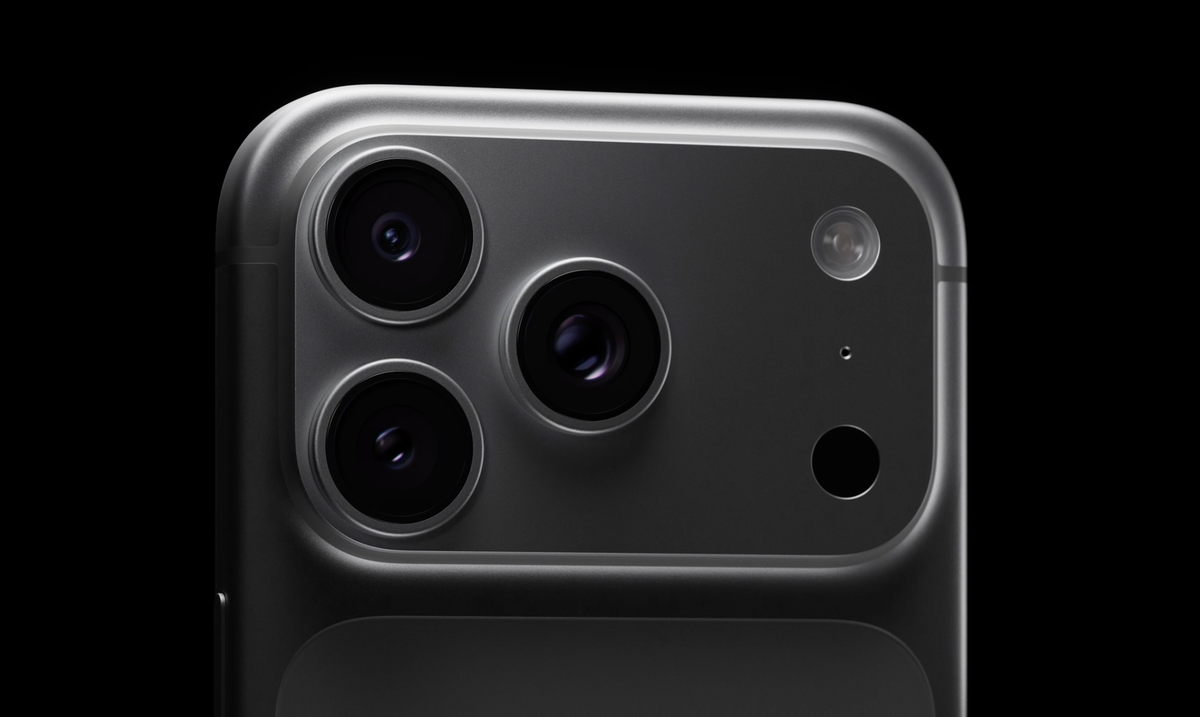
Every year I watch the Apple Event where Apple announces the latest iPhones, I can’t help but sympathize with the Camera team at Apple. They have to deliver something big, new, even ground-shaking, on a regular annual cadence.
And every year, people ask us the same thing: is it really as big of a deal as they say?
iPhone 17 Pro in Silver — shot on iPhone Air
iPhone 17 Pro looks very different at first glance. It’s the biggest departure from the style of camera module and overall Pro iPhone style since iPhone 11 Pro. It still packs three cameras on the back and one on the front. It has an actual camera button (even its svelte sibling, the iPhone Air gets one of those, albeit smaller) and a few notable spec changes, like a longer telephoto zoom. Or is it? And is that really all there is to it?
To find out, I took iPhone 17 Pro to New York, London and Iceland in just 5 days.
We do not get early access like the press: this is a phone we bought, to give you an unfiltered, real review of the camera. All the photos in this review were taken on iPhone 17 Pro, with the Apple Camera app or an in-development version of Halide Mark III with color grades.
Let’s dig in — because shooting with iPhone 17 Pro, I was surprised by quite a few things.
What’s New
iPhone 17 Pro packs what Apple calls the new 'ultimate Pro camera system'. This is the last upgrade the camera bump — er, I mean, plateau — was arguably still lacking.
After its introduction with iPhone 11 Pro, all cameras were shooting at a fairly standard 12 megapixels. After the ultra wide camera was upgraded to 48 megapixels in iPhone 16 Pro, Apple finally upgraded the telephoto camera sensor to a 56% larger unit with 48 megapixels. Not only does this allow for sharper shots, but Apple is so confident in its center-crop imaging pipeline that it argues it allows for a 12-megapixel 8× zoom of 'optical quality'. More on that one in its own, detailed section: I am a big telephoto fan, and this announcement had me immediately excited to test it out.
One of the biggest upgrades this year actually comes to the front camera — but its quality impacts will be far less noticeable to most people than most tech pundits initially predicted. In a classic Apple move, the company replaced the bog standard selfie camera with a much larger square-sensor packing camera, but instead of now simply shooting 24 megapixel square shots it added a very clever Center Stage system to reframe your selfie shots to include people into it automatically or save you from twisting your arm to take a landscape selfie shot.
This is a very impressive piece of engineering, and a classic Apple innovation in that the hardware change is essentially invisible. Us camera geeks love the idea of a square sensor, but in the Camera you will not find a way to take images with the full square image area; it just puts the square area of the 24MP sensor to use for 18 MP crops in their landscape or portrait depending on the subject matter.
Apple (in my opinion, correctly) figured that if this artistic choice being made by your iPhone offends you as an artist, you are free to use one of the better cameras on the rear of the iPhone or disable the automatic framing feature altogether, returning its behavior to a 'normal' front-facing selfie camera.
Finally, there's some notable changes to processing. "More detail at every zoom range and light level". In particular, Apple stated in its keynote that deep learning was used for demosaicking raw data from the sensor's quad pixels to get more natural (and actual, existing) detail and color in every image. In particular, Apple went to point out this also meant that its AI upscaling that's used to make those '2×' and '8×' 'lenses' (that are actually the center portion of the 48MP Main and Telephoto cameras) is significantly improved.
Finally, and not insignificantly, the entire phone has gotten a total design overhaul. Its interface and exterior are both composed of all new materials, and some big changes under the hood (or ceramic back panel, if you will) allow for even more performance out of the latest generation Apple Silicon chip inside.
What’s Not New
While the entire iPhone looks brand new, the cameras have some familiar parts. The Main camera sensor and lens is identical to the iPhone 16 Pro's, which in turn is identical to the iPhone 15 Pro's. The ultra wide camera, too, is the same as last year's 48 megapixel snapper.
The Camera Control from iPhone 16 Pro returns on all iPhone 17s and iPhone Air. No significant updates here, but I still find it a fantastic addition to the iPhone for opening my choice of camera app and taking a photo. The adjustments, on the other hand, still seem fiddly to me a year later. I was hoping for some more changes to it, perhaps even a face lift along with iOS 26 — but it has remained essentially the same save for some additional settings to fine-tune it to your liking.
Party in the Front, Business in the Back
This is, without a doubt, a great back camera system. With all cameras at 48MP, your creative choices are tremendous. I find Apple's quip of it being 'like having eight lenses in your pocket' a bit much, but it does genuinely feel like having at least 5 or 6: Macro, 0.5×, 1×, 2×, 4× and 8× .
The — unchanged save for processing tweaks — ultra wide and main camera are still great. I find the focal lengths ideal for day-to-day use and the main camera especially is sharp and responsive. Its image quality isn't getting old (yet).
What's beginning to get very old is its lack of close focusing. Its new sibling camera in iPhone Air focuses a whole 5 cm (that's basically 2 inches) closer, and it's very noticeable. For most users, arms-length photography is an extremely common use case: think objects you hold, a dish of food or an iced matcha, your pet; you probably take photos at this distance every day. And if you do, you'll have encountered your iPhone switching, at times rapidly, between the ultra wide 'macro' lens and the regular main camera — one of which produces nice natural bokeh and has far higher image quality. It's been several years of this now, and it's time to call it out as a serious user experience annoyance that I hope can be fixed in the future. This is, incidentally, one of the reasons why our app Halide does not auto-switch lenses.
We love a good 2× lens
Shooting at 2× on iPhone 17 Pro did produce noticeably better shots; I believe this can be chalked up to significantly better processing for these 'crop shots'. Many people think Apple is dishonest in calling this an 'optical quality' zoom, but it's certainly not a regular digital zoom either. I am very content with it, and I was a serious doubter when it was introduced.
The entire camera array continues to impress every year in working in unison: this year, more than ever, my shots were very well color and color temperature matched and zooming was more smooth between lenses than I'd seen.
It's wild that they pull this off with 3 different camera sensors and lenses. It's essentially invisible to the average user, and that's a real feat. No other company does this as well: pick up an Android phone and go through their copy of the iOS Camera zoom wheel to see for yourself sometime.
4× the Charm
I have previously written perhaps one too many love letter to the 3× camera lens that the iPhone 13 Pro, 14 Pro had. While it had a small sensor, its focal length was just such a delight; one of my favorite go-to lenses is 75mm. Shooting with longer lenses is a careful balance of framing, and it's harder the longer the focal length is.
I had to actually think about achieving a nice scene here with the telephoto lens, rather than the ultra-wide's 'shoot my view' approach.
Creative compositions are much easier when you have to select what not to include rather than to focus attention on one thing; the devil is in the detail.
The previous iPhone traded some image quality in the common zoom range (2-4×) for reach. I found the 16 Pro's 5× lens reach spectacular, but creatively challenging at times for that reason. There was also a tremendous gap in image quality between a 3× - 4× equivalent crop of the Main camera and the telephoto, which made missing an optical lens at that range even more painful.
4× is an elegant solution; while I do still miss 3× — 3.5× would've been perfect, but admittedly not nearly as numerically satisfying as 1-2-4-8× — the lens' focal length is fantastic for portraiture and details alike, and its larger sensor renders impressive detail:
Even in low light, the lens performs admirably — due to a multitude of factors: excellent top-tier stabilization of the sensor 3D space, software stabilization, good processing and a larger sensor.
It is still is very much reliant on processing and Night Mode compared to the Main camera, however — expect those nighttime shots to require ProRAW and / or Night Mode to get the most out of a shot.
This is a pretty significant improvement over the way the previous 5× lens handled a dark scene.
Even then, things will look fairly 'smoothed over':
Detail in the buildings here is entirely smoothed over by noise reduction. It's a larger sensor, but a long lens and still relatively small sensor just means noisy images at night, which shows up as heavy noise reduction in the shadows.
Regardless, this is a tremendous telephoto upgrade, and if you were as much of a telephoto lover as me it might well be reason alone to upgrade.
Are the 48 megapixel details truly visible? Well, judge for yourself:
I find that the resolution is great, though the lens is a bit soft.
I found that the softness of the lens and its lack of heavy handed sharpening in post (at least in Halide's Process Zero or Camera's ProRAW capture mode) felt downright atmospheric. You can always add heavy sharpening later if you want that effect.
I like this softness, myself; it is to Apple's great credit that there isn't some kind of heavy handed sharpening algorithm that pushes these images to look artificially sharper.
It renders very naturally, extremely flattering for portraiture, and showcases processing restraint that I haven't seen from many modern phone makers. Bravo.
It also has an additional trick up its sleeve thanks to those extra pixels and processing: an additional lens unlocked by cropping the center 12 MP area of the image, along with some magical processing. Does it really work?
8× Feature's a Feat
The overall experience of shooting a lens this long should not be this good. I've not seen it mentioned in reviews, but the matter of keeping a 200mm lens somehow steady and not an exercise in tremendous frustration is astonishing. Apple is using both its very best hardware stabilization on this camera and software stabilization, as seen in features like Action Mode.
You will notice this while using the camera at this zoom level: the image will at times appear to warp in areas of your viewfinder, or lag behind your movement a little bit. The only way to truly communicate how impressive this is is to grab a 200mm lens and hand-hold it: you'll find that it magnifies the small movements of your hand so much that it is really hard to frame a shot unless you brace it.
And then there's the images from this new, optimized center-crop zoom.
To say I've been impressed with the output would be an understatement.
Sometimes you get a little bit of a comedic effect as you realize you are seeing things through the telephoto lens you hadn't even noticed or can't quite make out with your own eyes:
And other times you become that stereotypical bird photographer (or in my case, a wanna-be). I will note that even with its magical stabilization, getting a picture of something in rapid motion is a bit of a challenge...
... but the results are truly magical if you do nail it. Is this tack sharp?
Well, no, but this is 500% detail of a crop of a phone sensor shooting at 200mm at a fast moving bird on a cloudy day. I am pretty impressed.
It allows for some astonishing zoom range through the entire system.
I mentioned it before, but I want to reiterate it because it's such a fun creative exercise for anyone with this phone: I believe that the longer the lens, the more of your skills in creating beautiful compositions and photos will be challenged. It's just not that easy — but it also means you suddenly find different beautiful photos in what was previously a single frame:
The details are often prettier than the whole thing. Now I get to choose what story my image tells. What caught my eye, or what made the moment so magical. In video this is also lots of fun; I will post some Kino shorts on our Instagram to highlight the fun of moving video details of a scene.
Another example: here, Big Ben can take the center stage. As I shoot at 4×, I get an 'obvious' composition:
At 8×, I am presented with a choice: I can capture the tower, or the throng of people crossing the bridge and note as the evening sun lights up the dust in the air:
I like what this
Frequently Asked Questions
What is iPhone 17 Pro Camera Review: Rule of Three about?
iPhone 17 Pro is here, a big upgrade and makeover of the iPhone and its cameras. Is it really as big of a deal as they say?
Which category does this article belong to?
This article is part of our iPhone Camera collection on StartsNest.
Is this content free to read?
Yes, all articles on StartsNest are free to read. No registration required.

Aisha Rahman
Aisha Rahman is a product researcher and consumer technology writer with 5 years of experience evaluating mobile devices, accessories, and digital services. She specializes in hands-on product comparisons, buying guides, and value analysis for budget-conscious consumers in emerging markets.
View all articles by Aisha Rahman →More to read
iPhone 17e: An Almost Perfect Entry
You may think the e in 17e stands for economy or essential, but I think it stands for entry. Sure, it doesn't have all the bells and whistles, but you get access to vibrant ecosystem of third-party apps, and now your friends will stop mocking you for green
Apple Log Explained
Editor's note: We make photography and video apps, so it's about time we released video versions of our essays. Check out the companion video shot in Kino 1.4, or read on for text! Today we're launching support for Apple Log 2 in our award winning video
Inside Looks: A Mark III Preview
Today launched a public preview of Halide Mark III, the next generation of our flagship photography app. It's still a work in progress, but we're ready to start sharing what we've worked on for the past year through a series of app updates alongside posts like this. Today, we're diving into Looks.
Comments (0)
No comments yet. Be the first to share your thoughts!